
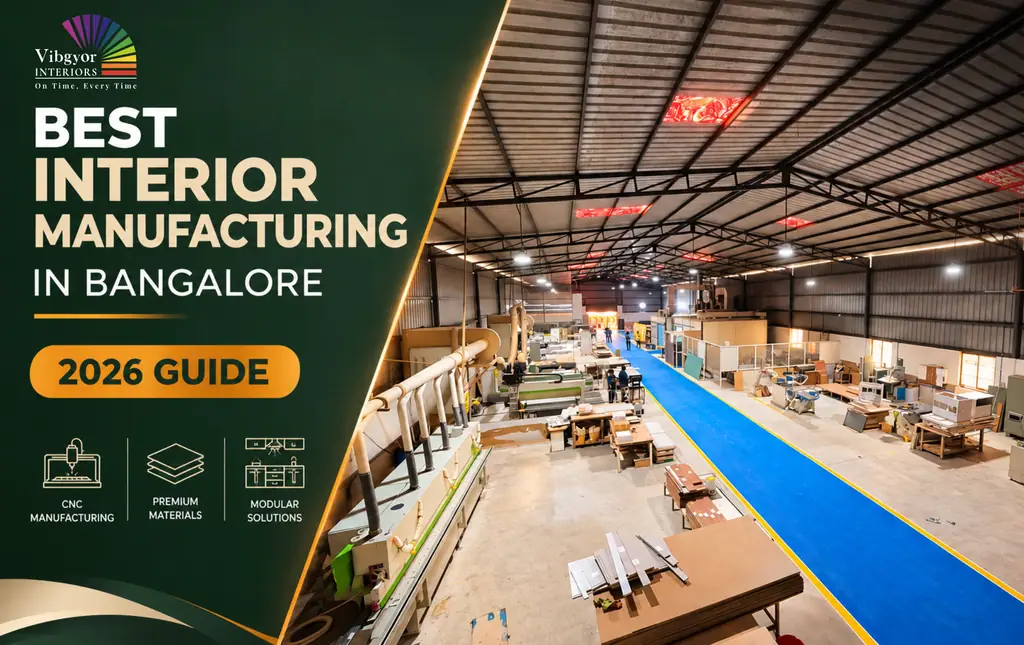
Quality interior manufacturing in Bangalore comes down to five things done right at every step: certified materials, CNC precision, sealed edges, tested hardware and a final check before anything leaves the factory. Miss even one, and you’ll notice it within a couple of years, usually as a sagging shutter or a swollen kitchen base.
Everyone says their furniture is “high quality”. But very few explain what that actually means, or how you can check it.
So in this guide, we walk you through how quality is built into modular furniture, stage by stage, at our Glide factory in Bangalore. You’ll also learn what to look for in trending finishes like Japandi oak, fluted panels and handle-less kitchens, plus eight simple checks you can do yourself before you sign off on any interior project.
What Quality Interior Manufacturing in Bangalore Really Means
Quality isn’t one feature; it’s five working together. If a manufacturer gets all five right, your furniture will look good and work smoothly for 10 to 15 years.
| Pillar | What it means | What happens when it’s missing |
| Materials | Certified plywood of the right grade for each room | Kitchen bases swell, shelves sag |
| Precision | CNC-cut panels accurate to the millimetre | Uneven gaps, doors that don’t align |
| Edges | Every exposed edge sealed by machine | Moisture gets in, edges peel and chip |
| Hardware | Branded, tested hinges and channels | Doors drop, drawers stick or jam |
| Checks | Pre-assembly and inspection before dispatch | Problems surface only after installation |
Quality Starts with Raw Materials
No machine can fix a poor board. That is why quality checks begin the moment materials arrive at the factory.
Plywood grade and certification
We use BWP (boiling water proof) plywood for kitchens, bathrooms and utility areas, and MR (moisture resistant) plywood for dry areas like wardrobes. In addition, we check for ISI marks and the manufacturer’s grade stamp on every batch.
Board thickness and flatness
Carcasses typically use 18 mm boards, while back panels use thinner sheets. Our team checks that every sheet is the right thickness and lies flat, because a warped board leads to doors that never quite close.
HDHMR for shutters
HDHMR (high density, high moisture resistance) boards are dense, smooth and stable. As a result, they make an excellent base for acrylic, PU and anti-fingerprint matte shutters.
Finishes and edge tapes
We check laminates, acrylic sheets and edge tapes for colour match and thickness before they go into production. For example, a two-tone kitchen needs perfectly consistent olive and off-white shades across every panel.
Hardware
We use branded soft-close hinges, drawer channels and lift-up systems. [e.g. Hettich, Blum, Häfele.] Each batch gets a quick function test before fitting.
How Quality Is Built at Every Manufacturing Stage
Each stage of production has its own checkpoint. Here’s what we make and what we check along the way.
1. Design to production drawings
First, our team converts the approved 3D design into cutting lists and panel drawings. Then a second person cross-checks dimensions, hinge positions and appliance cut-outs before anything gets cut.
2. CNC cutting
Our CNC router cuts every panel from the digital drawing. Consequently, sizes stay accurate to the millimetre, which keeps shutter gaps even and fluted grooves perfectly aligned.
3. Edge banding
Next, an automatic edge banding machine seals every exposed edge with matching tape. We then check each edge for gaps, glue lines and colour match, since a poorly sealed edge lets Bangalore’s humidity creep in.
4. Drilling and boring
After that, machines drill hinge cups, shelf holes and joinery points. Precise drilling means hinges sit straight and doors hang level from day one.
5. Finishing
We apply and press finishes in a clean area, away from dust. For PU and veneer, our team checks the surface under bright light for bubbles, scratches or uneven coats.
6. Pre-assembly and testing
We dry-fit carcasses, mount shutters and test every hinge, drawer and lift-up. If a drawer doesn’t glide or a door doesn’t close softly, we fix it here.
7. Labelling and packing
Finally, we label each panel by room and position, then wrap it in protective packaging so it reaches your home without a scratch.
Quality in 2026’s Trending Interior Finishes
The most popular finishes of 2026 look simple, but they’re unforgiving. Small manufacturing errors show up immediately, so they need extra care.
Fluted panels
Fluted TV walls, headboards and shutters only look premium when every groove is the same depth and spacing. That is why we cut them on CNC rather than by hand.
Handle-less gola kitchens
Gola profiles depend on perfectly straight, level channels. Even a 2 mm error makes shutters look uneven, so we check alignment during pre-assembly.
Two-tone kitchens
Olive and off-white or walnut and cream kitchens need the same shade on every panel. For this reason, we source each colour from a single batch wherever possible.
Japandi oak and walnut veneers
Japandi and warm minimal interiors rely on natural-looking wood grain. We match the grain direction across neighbouring panels, so a wardrobe reads as one calm surface rather than a patchwork.
Anti-fingerprint matte shutters
Super-matte surfaces scratch easily if handled carelessly. Therefore, we protect them with film through production and remove it only after installation.
Integrated LED profile lighting
We route grooves for LED profiles at the factory stage, so lights sit flush and wiring stays hidden. The result is a clean glow in wardrobes, shelves and kitchen wall units.
8 Ways to Check Interior Quality Yourself
You don’t need to be an expert to spot good workmanship. Try these simple checks at a showroom, a finished home or your own handover.
- Look at the gaps. Shutter gaps should be even, usually around 2 to 3 mm, from top to bottom.
- Run a finger along the edges. Edge banding should feel smooth, with no sharp corners, gaps or glue lines.
- Open and close every door. Soft-close hinges should shut gently and quietly without a push.
- Pull drawers all the way out. They should glide smoothly and stay level under a little weight.
- Check the inside, not just the outside. Look for neat edges and finished surfaces inside cabinets too.
- Find the plywood stamp. Ask to see the grade and ISI mark on the board.
- Check the hardware brand. Most branded hinges and channels carry a visible logo.
- Ask for the warranty in writing. A confident manufacturer will put it on paper.
If a piece passes all eight checks, you’re looking at quality manufacturing.
Where Quality Is Made: Glide by Vibgyor Interiors
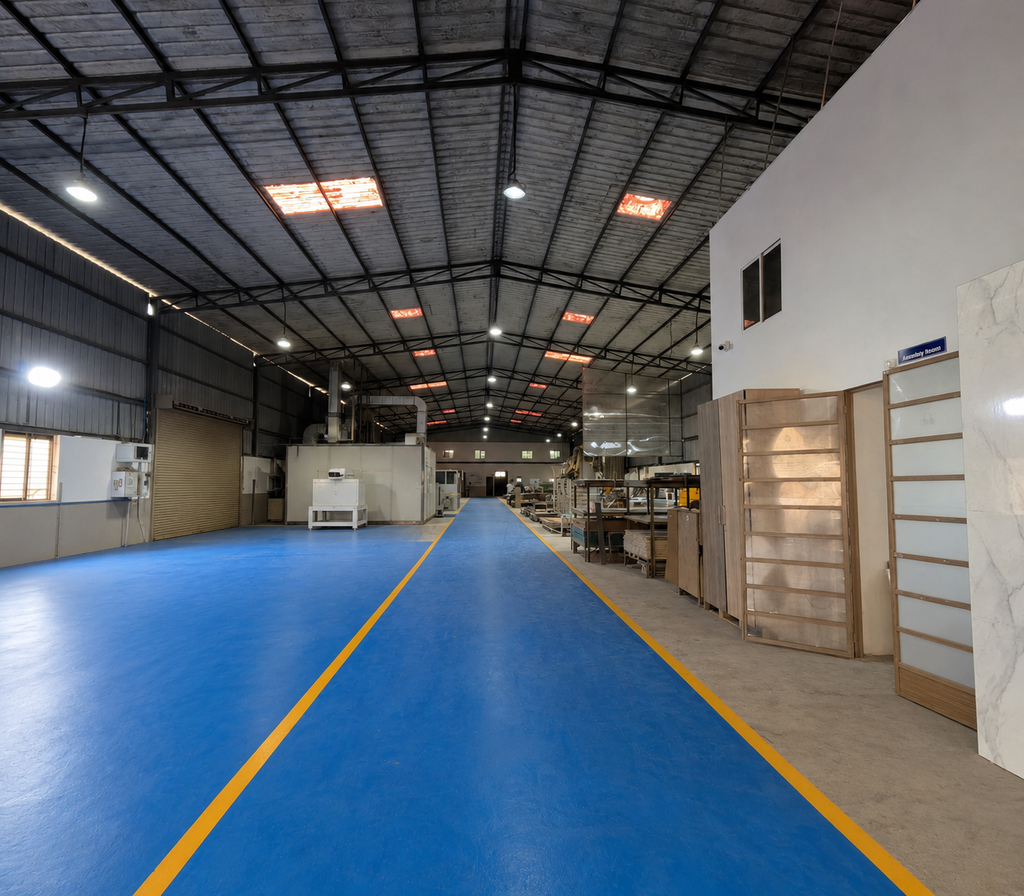
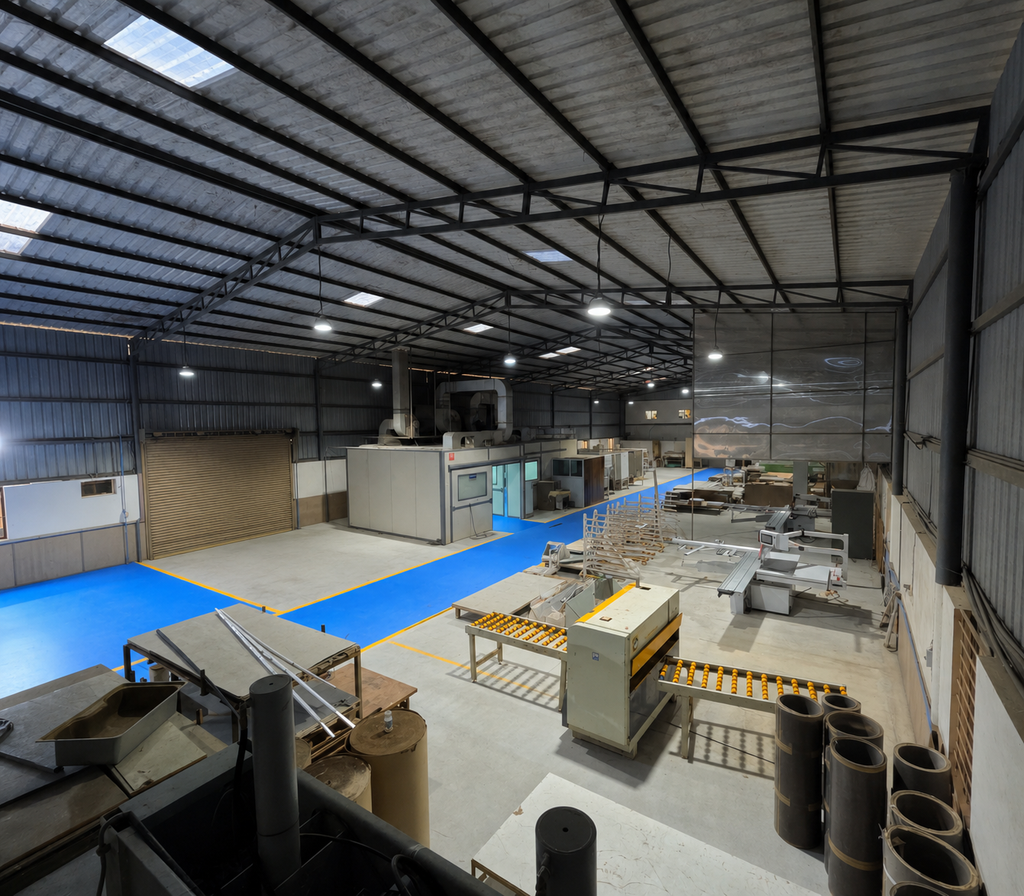
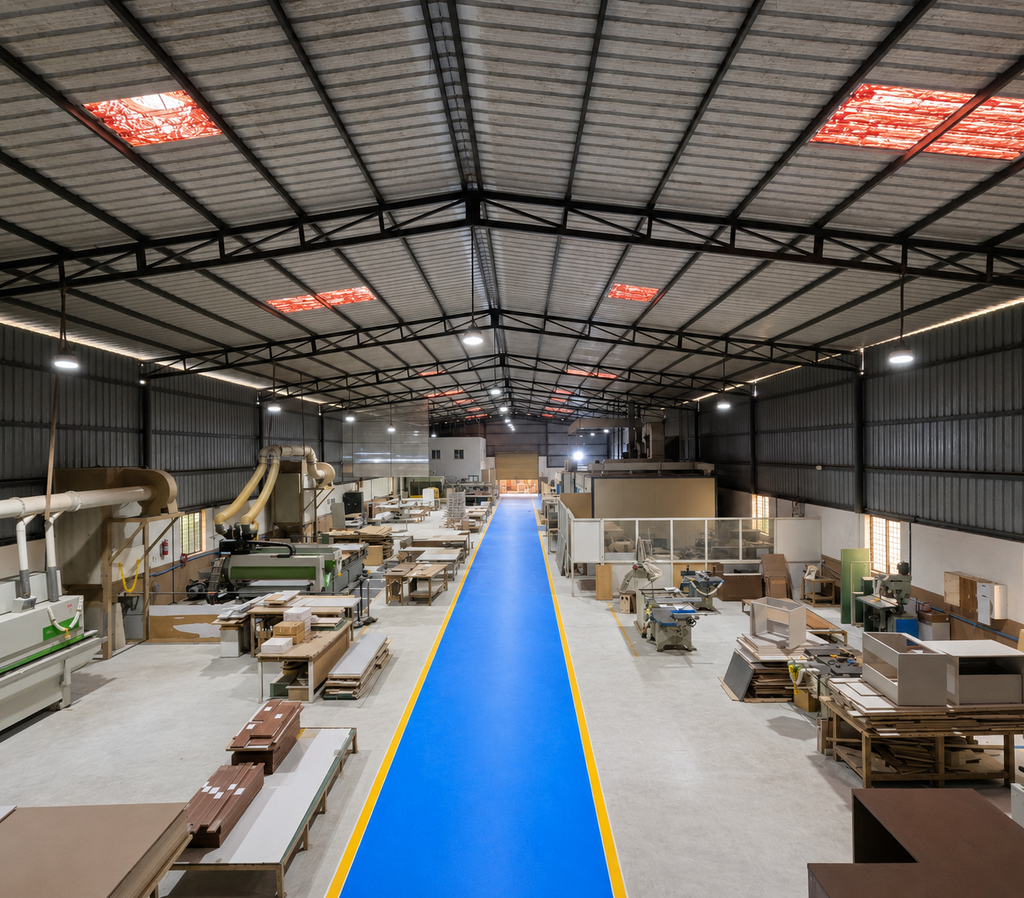
Everything in this guide happens every day at Glide, the manufacturing arm of Vibgyor Interiors. Glide runs its own factory in Bangalore, with a CNC router, automatic edge banding machine, overhead dust extraction and a clean, organised production floor.
- One team, end to end. Vibgyor designs your home, and Glide manufactures it, so nothing gets lost in between.
- Materials in writing. Your quote lists every board grade, finish and hardware brand.
- Checks at every stage. From raw materials to pre-assembly, each step has its own checkpoint.
- On time, every time. Most 2BHK and 3BHK homes take about 45 to 90 days from design sign-off.
Are you an interior designer, architect or builder? Contact Glide to discuss manufacturing for your projects.
Final Thoughts
Quality doesn’t happen at installation. Instead, it’s built in quietly, at every step, long before your furniture reaches your home.
So when you compare quotes, look past the 3D render and ask how the furniture is made, what goes into it and who checks it. That’s how you find quality interior manufacturing in Bangalore that lasts for years.
Planning your home? Book a free consultation with Vibgyor Interiors and see the difference for yourself.
Frequently Asked Questions
What makes quality interior manufacturing in Bangalore?
Quality interior manufacturing in Bangalore uses certified BWP or MR plywood, CNC cutting, machine edge banding, branded hardware and inspection at every stage before furniture leaves the factory.
How can I tell if modular furniture is good quality?
Check for even shutter gaps, smooth sealed edges, soft-closing doors, smoothly gliding drawers, a visible plywood grade stamp and branded hardware, and always ask for a written warranty.
Why is edge banding important?
Edge banding seals the exposed edges of boards. It stops moisture from getting in, prevents chipping and gives each panel a clean, finished look.
Is CNC-made furniture better than handmade furniture?
For modular furniture, yes. CNC machines cut and drill to the millimetre, so panels fit perfectly and fluted or handle-less designs look consistent.
Which plywood is best for Bangalore’s climate?
BWP plywood is best for kitchens, bathrooms and other wet areas, while MR plywood works well for wardrobes and other dry spaces.
Can interior designers order from Glide?
Yes.Designers, architects and builders can contact Glide to manufacture furniture for their projects.
Found this useful? Save it for later or share it.
Topics covered: